The core stays published.
The five-layer Epistemic Maturity Model and the AI Decision Authority Model remain openly published regardless of how the standard evolves or how WEKID's market position changes.
Open standards should outlast their stewards. The WEKID Pledge defines the structural commitments intended to keep the core standard published, contribution open, conformance criteria public, and stewardship capable of moving to a neutral body as adoption grows.
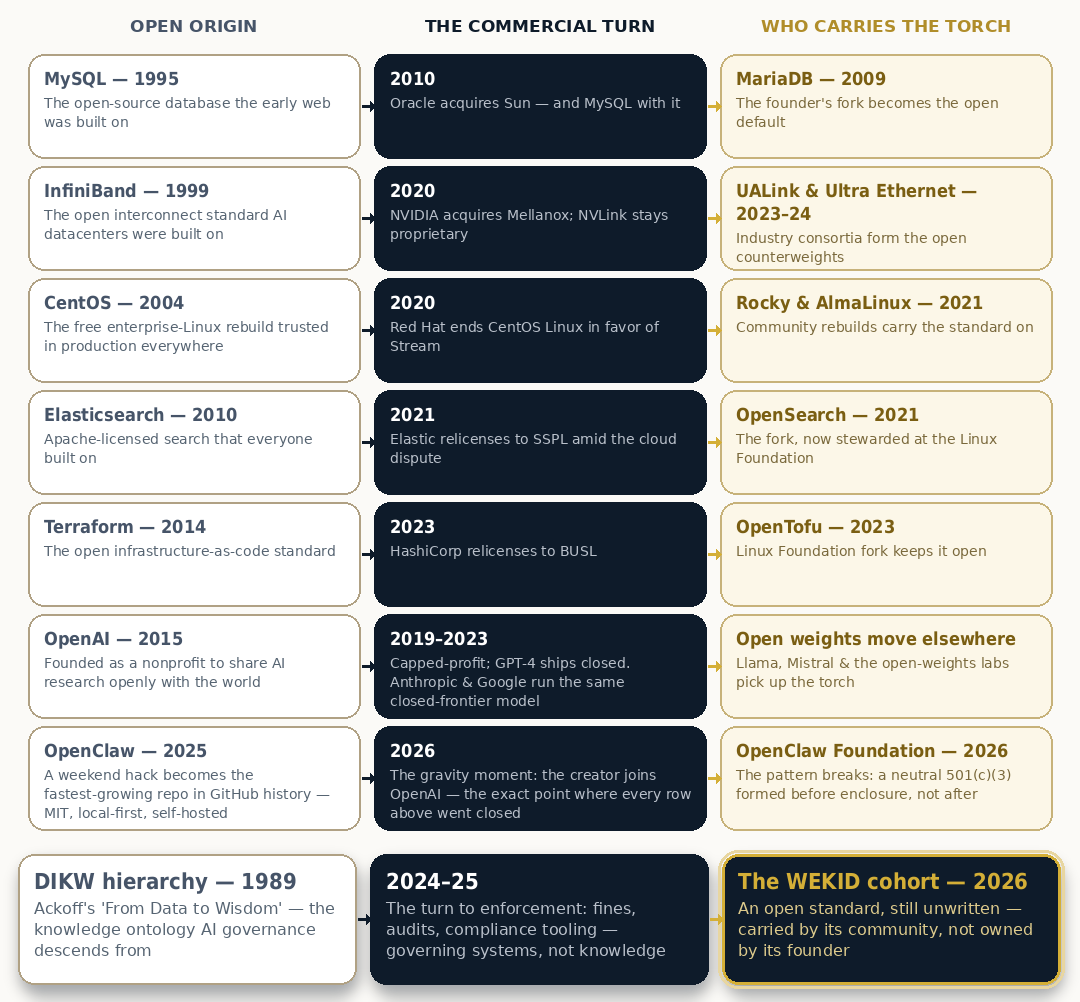
Every generation of open projects and standards has shown the same lesson: commercial sponsors and open standards can thrive together, but openness is durable only when the governing structure makes it durable. Single ownership creates a failure mode because strategies, incentives, and market positions can change.
The five-layer Epistemic Maturity Model and the AI Decision Authority Model remain openly published regardless of how the standard evolves or how WEKID's market position changes.
The evidence corpus, calibration profiles, public comment, and RFC process remain open to structured community contribution, with public and attributed recognition where appropriate.
As adoption grows, stewardship of the core is intended to move to a neutral body so the standard can outlast any single organization, including WEKID LLC and its founder.
Conformance criteria remain openly published. Certification verifies understanding and implementation quality; it is not intended to become a mechanism for closing access to the framework itself.
When one company owns a standard, openness can become a strategy rather than a permanent property. The WEKID Pledge is intended to put the opposite principle in writing from the start: the standard should remain readable, implementable, reviewable, and improvable even as its steward, ecosystem, and commercial model evolve.
The Pledge sits around the normative standard rather than replacing it. The numbered Standards define requirements; RFCs provide the public change path; community contribution supplies evidence and domain expertise; and published conformance criteria keep implementation claims reviewable.